There’s something you haven’t said.
To a colleague.
To someone you love.
To a neighbour.
To someone no longer with us.
Sometimes in a language that isn’t your first.
Beneath the silence, very often, is the same quiet fear: of hearing “no.”
About fifteen minutes. Your answers never leave your own device.
Where it shows up
The conversation you keep putting off
You’ve rehearsed it a hundred times. You know how it starts. And still, somehow, it hasn’t been said.
Who Else Is in the Conversation? — free →The research that has stalled
The draft you can’t bring yourself to send. The supervisor’s feedback that reads like a verdict on you, not on the work.
PhD & MA coaching →The loss that won’t close
Grief can feel like being left. Why did he go? Why wasn’t I enough to keep her? There is no closure — but there is a way to carry it.
There Is No Closure — free guide →In a language that isn’t your first
Every sentence carries a small risk of being judged, misunderstood, or taken for less than you are. So you wait for the right words — and the moment passes.
Start with the free exercise →The thread underneath
For thirty years I worked in places torn apart by conflict. Many of the people I sat with felt rejected by the society around them. And many of those drawn into terrible acts had felt the pain and anger of rejection too — real or perceived.
Later, most of the people I worked with online were learning English. I quickly realised how deeply many of them feared rejection every time they spoke in their second or third language.
And it was through writing that I finally saw my own long relationship with rejection.
There is a name for this: rejection sensitivity. It isn’t a diagnosis, and you don’t need the label. What matters is noticing when the fear of a no has started making your decisions for you.
The people carrying the heaviest things are almost never the ones you’d guess
Sometimes they look like they’ve lost control. More often they look like they have everything under control – the respected surgeon, the senior director, the official everyone else relies on. The armour and the burden tend to be the same size.
I’ve spent a few decades talking with people who could not say, out loud, what they were actually carrying. Some of those conversations happened in conflict zones. Some in ordinary sitting rooms and offices. The problem was rarely the one the world would have expected. It was the private crisis behind the competent face – the war going on inside, with nowhere safe to take it.
That’s the work. Not fixing you. Not curing you. Helping you govern the war within – quietly, and without it costing you the standing you’ve spent a life building.
Many of the people I work with are neurodiverse – ADHD, autistic, or both. I don’t treat that as something to be managed around. It often comes with ways of seeing and thinking that neurotypical people simply don’t have. I work with that, not against it.
Why people trust me with this
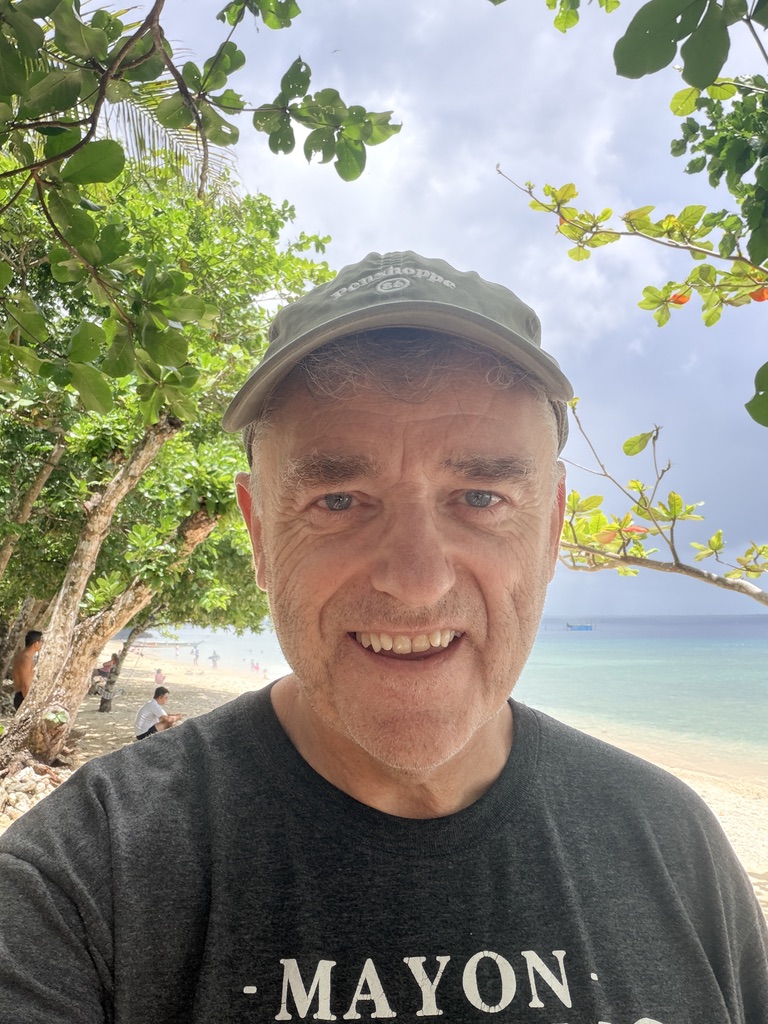
I didn’t learn this in a clinic.
I learned it sitting alone, often with no protection and nobody knowing where I was, across a table from people the world had every reason to fear. Men with hundreds of years on their sentences. People whose histories were, frankly, soul-destroying.
What strikes me now is that I wasn’t afraid. I sat with them, calm. It was only years later – digging back through it, the way I ask the people I work with to dig – that I understood how much fear there should have been. And that it had been running both ways all along. They were as wary of me as I should have been of them. Who is this man, why is he here, what does he want.
Perhaps I’ve sharpened it in the remembering – most of us do. But that’s rather the point. You don’t always know what you were carrying until you go back and look.
And what they handed me, in the end, was trust. Truths they had told no one.
I have never repeated a word of it. Not because I was told to keep it. Because that is simply who I am. Some things you are trusted with, you carry to the end.
The checkable version, for anyone who wants it: thirty years in and around conflict – Northern Ireland in the latter stages of the Troubles, then Kosovo, Colombia, Cambodia, and now the Philippines – always at street level, as an observer and a witness rather than a participant. I left school at sixteen. I have four degrees, including a PhD, all of which I paid for myself. And for three years I lectured prison officers outside Northern Ireland in communication, journalling and emotional intelligence, on a university contract.
If you recognise yourself in any of this – if you are carrying something you can’t say to a colleague, a friend, or anyone who needs something from you – you can write to me. Directly, and in confidence.
info@drmarcusanthony.comStart the method yourself
Before any conversation, you can try the method on your own – at your own pace, on your own terms. Many people start here, then bring what they find into a coaching conversation.
Also on your own: There Is No Closure — a short free guide on grief that does not end. The Excavation — the whole method in seven stages, at your own pace ($27). Already own it? Enter your code
Work with me
When you’re ready to do this alongside someone who has spent a career in the territory.
Work with Me
Negotiating with yourself, one to one – a short call for one thing looked at properly, or The Conversation, usually around an hour, for the heavier material.
Learn more →For particular situations: Writing as Excavation — structured writing for loss, grief, and the unfinished business underneath. PhD & MA Coaching — for researchers carrying the internal war academia wasn’t built for.
What the peace is for
Bruce Lee put it simply: absorb what is useful, discard what is useless. You find peace by digging for it – understanding what you have really been carrying, and making your treaties with it. You keep it by what you choose to stop feeding.
This was never about a cure. A cure would make you smaller. Governing the war within keeps you whole – and hands back the attention, the nerve, and the hours the fighting was taking, for the life it has quietly kept you from.
The digging is the part I can help with. What you build with what you find is yours.
The books
Your Civil War Within
Negotiate Peace with the Voices That Hold You Back.
The framework: how to see internal conflict as governance rather than pathology, and why false peace never lasts.
Ebook and paperback launching 5 November 2026.
Treaties with the Dead
A memoir built from years of reflexive journaling — the same practice that produced Your Civil War Within. What happens when you negotiate with loss, with family, with history – and what you discover, late in life, about neurodiversity and the wars you’ve been fighting.
Ebook and paperback launching 5 November 2026.
Both launch on 5 November 2026. Readers of my letters hear first →